Work/Audio Peak Latch + Scoreboard
Analog front end, digital memory, and the bugs you only find on a breadboard.
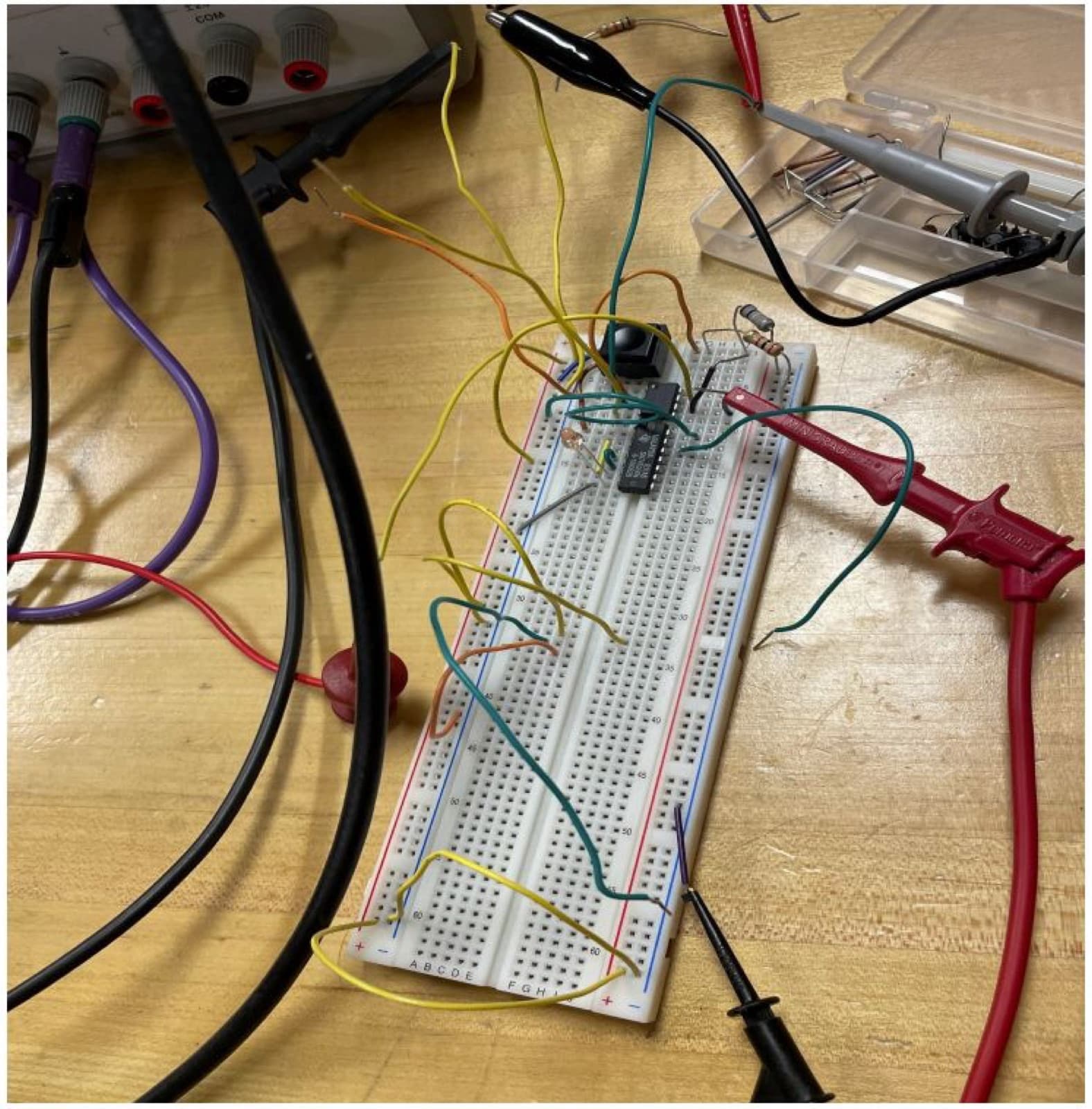
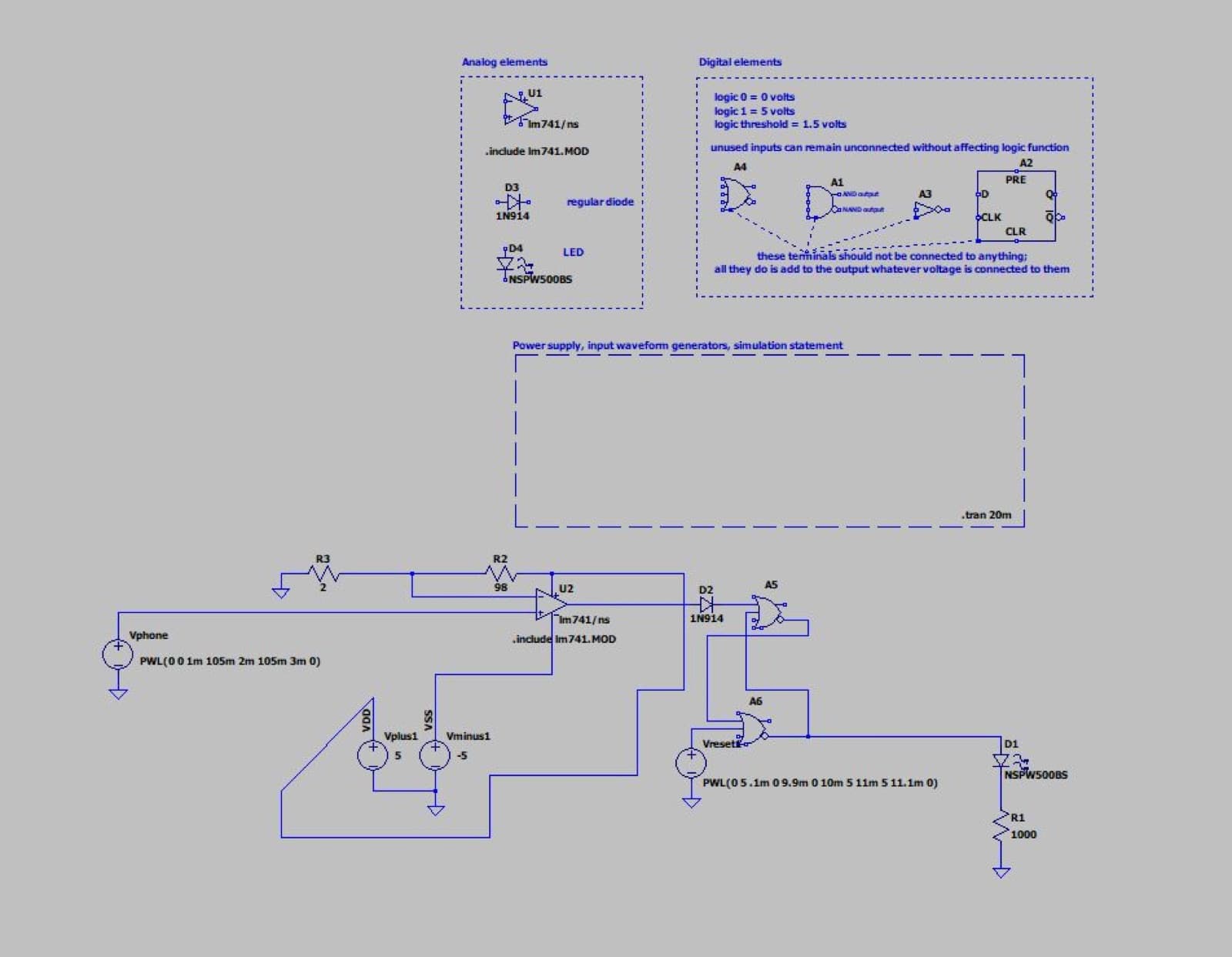
Jake's peak detector on the bench: a phone plays a 1 kHz tone into an LM741 amplifier with a gain of 50 (98 and 2 ohm resistors), and once the input passes 100 mV peak a latch lights the LED and holds it until the reset button is pressed. An ADALM2000 powers the board at plus and minus 5 V and probes the input and the amplifier output, which Scopy shows on the screen behind.
Overview
A circuit that watches a phone's audio jack and, if any signal above 100 mV peak shows up, lights an LED that stays lit until someone resets it. Plus a digital baseball scoreboard built from flip-flops.
Tools
- LM741
- flip-flops
- LTspice
- ADALM2000
- Scopy
- When
- 2025
- Where
- Breadboard builds
- Role
- Designer
latch.
Anything over 100 mV, and the LED stays on.
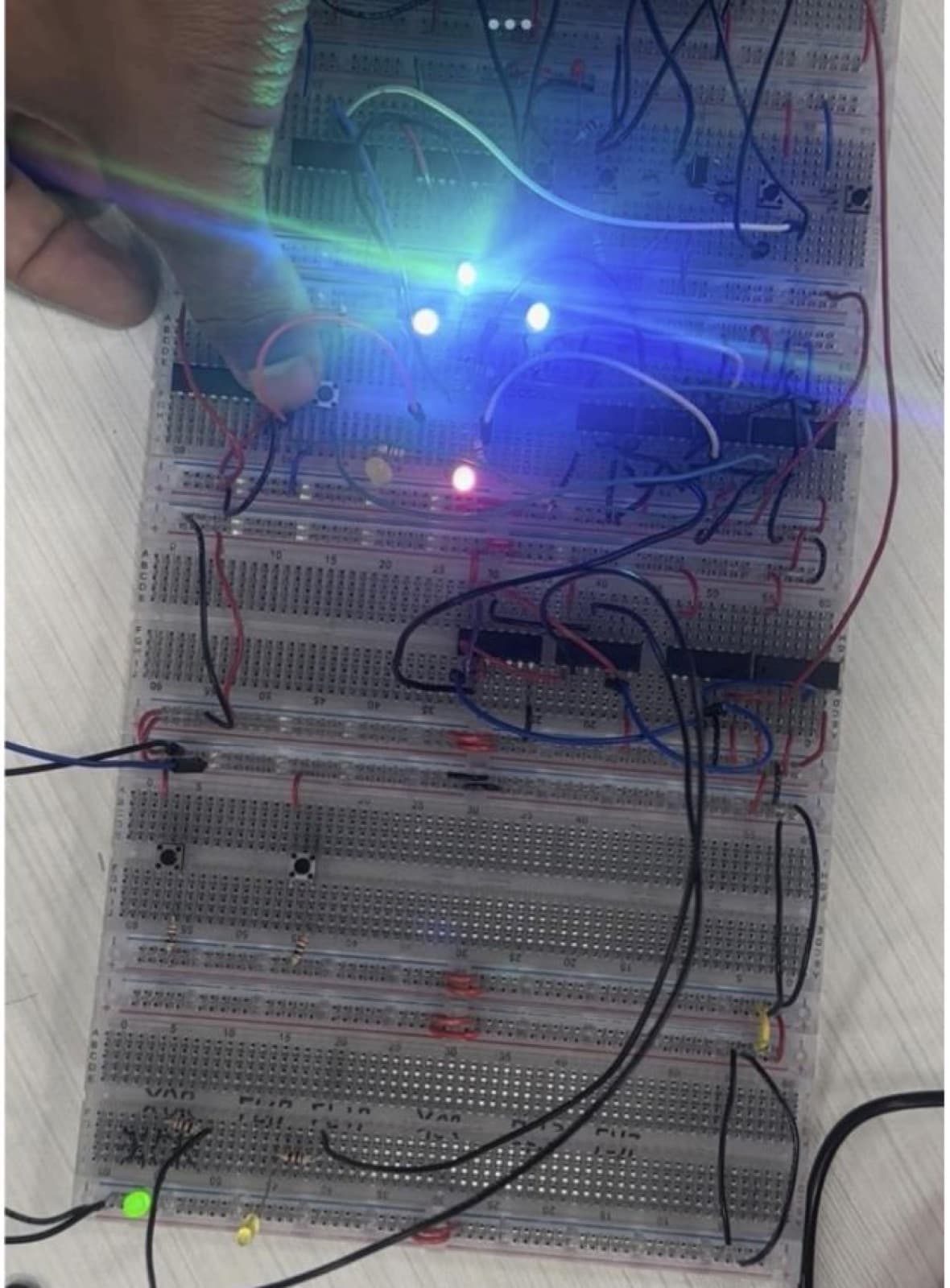
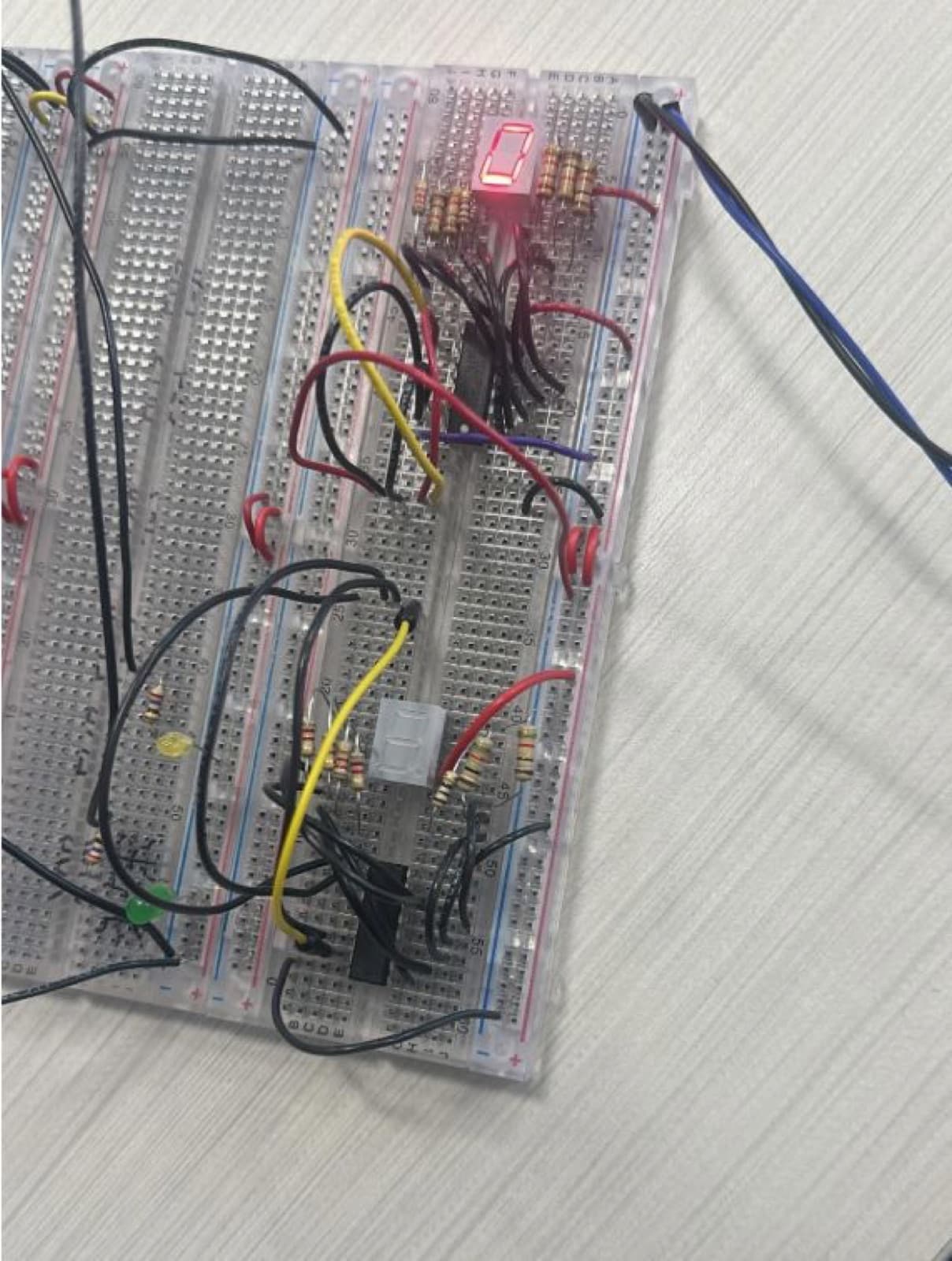
Designed the peak latch: an LM741 non-inverting amplifier into a digital threshold and a D flip-flop that holds the LED on until reset. Simulated in LTspice.
Verified the real circuit with an oscilloscope (Scopy + ADALM2000).
scoreboard.
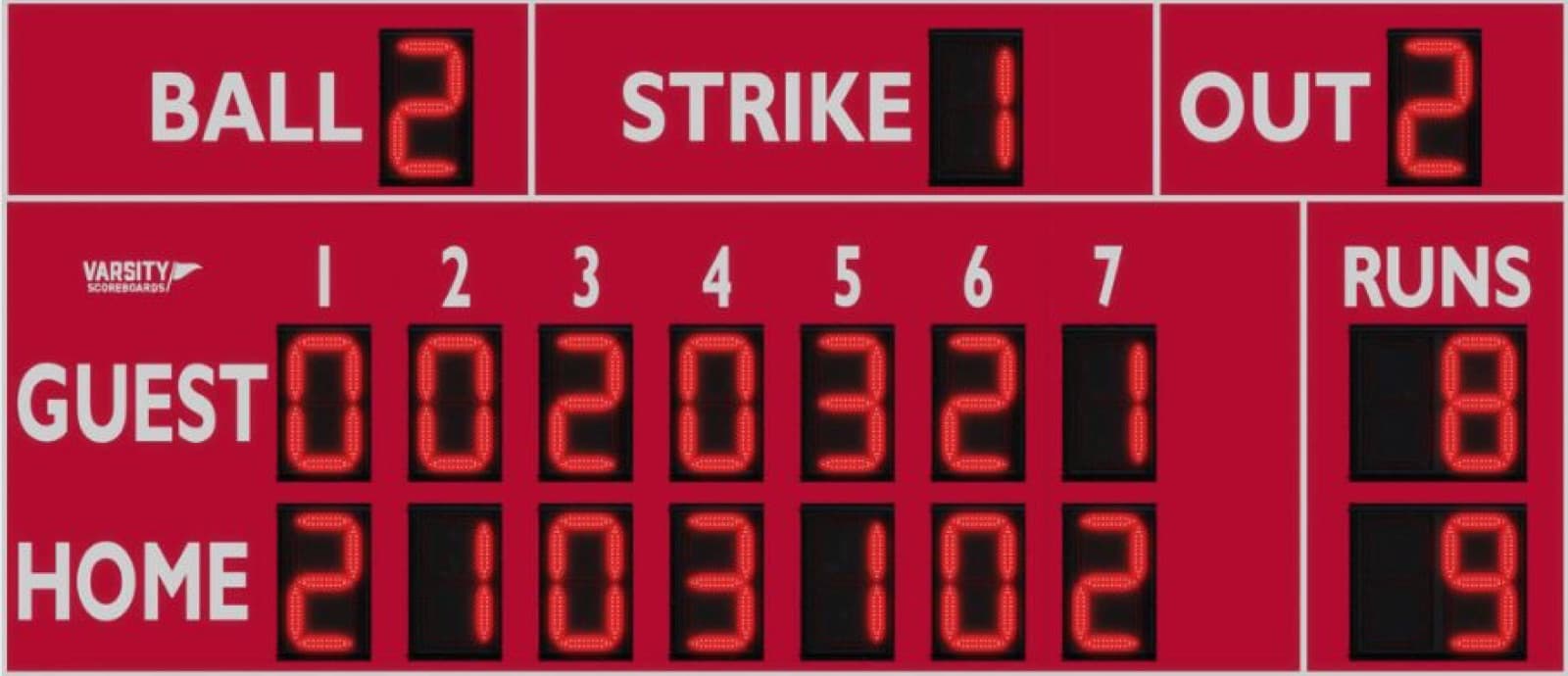
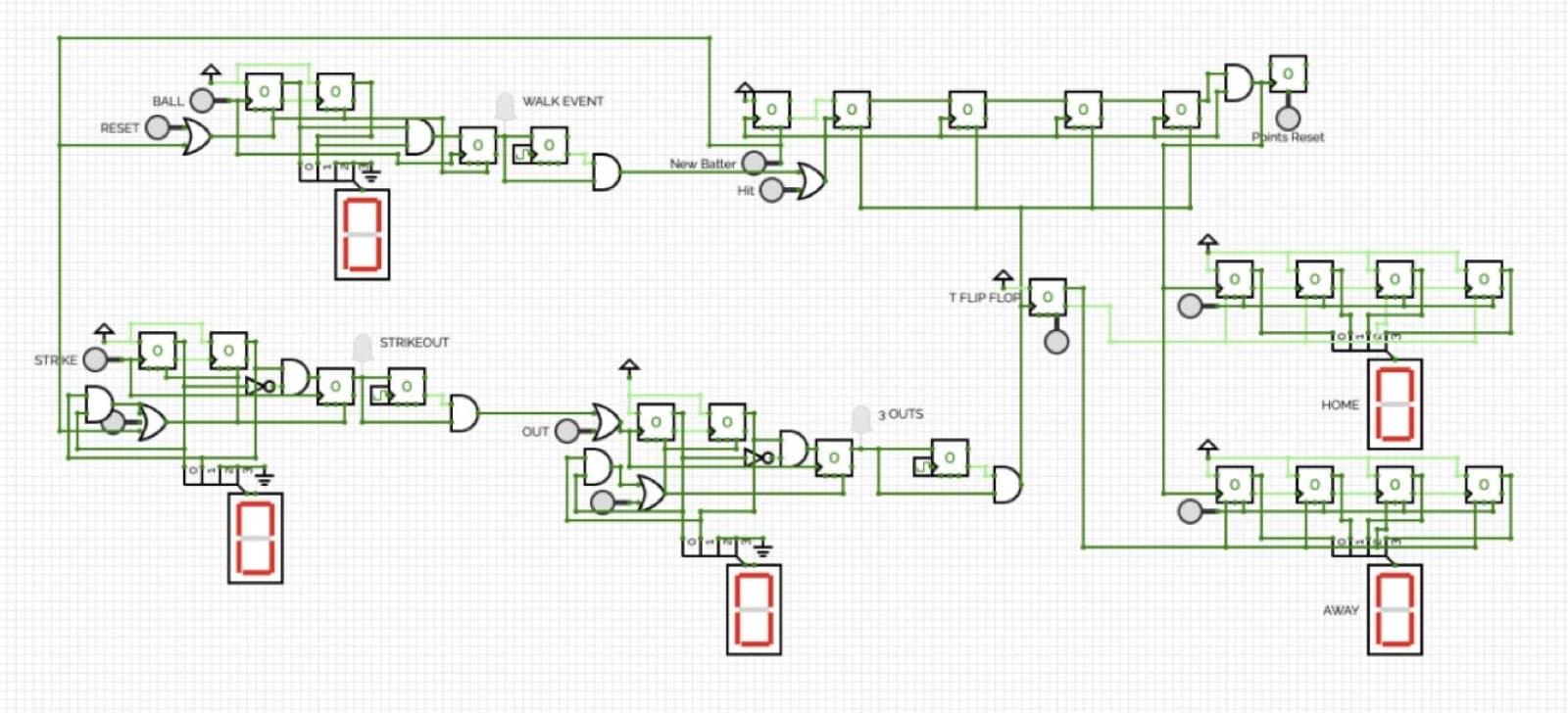
A ballpark scoreboard built from flip-flops.
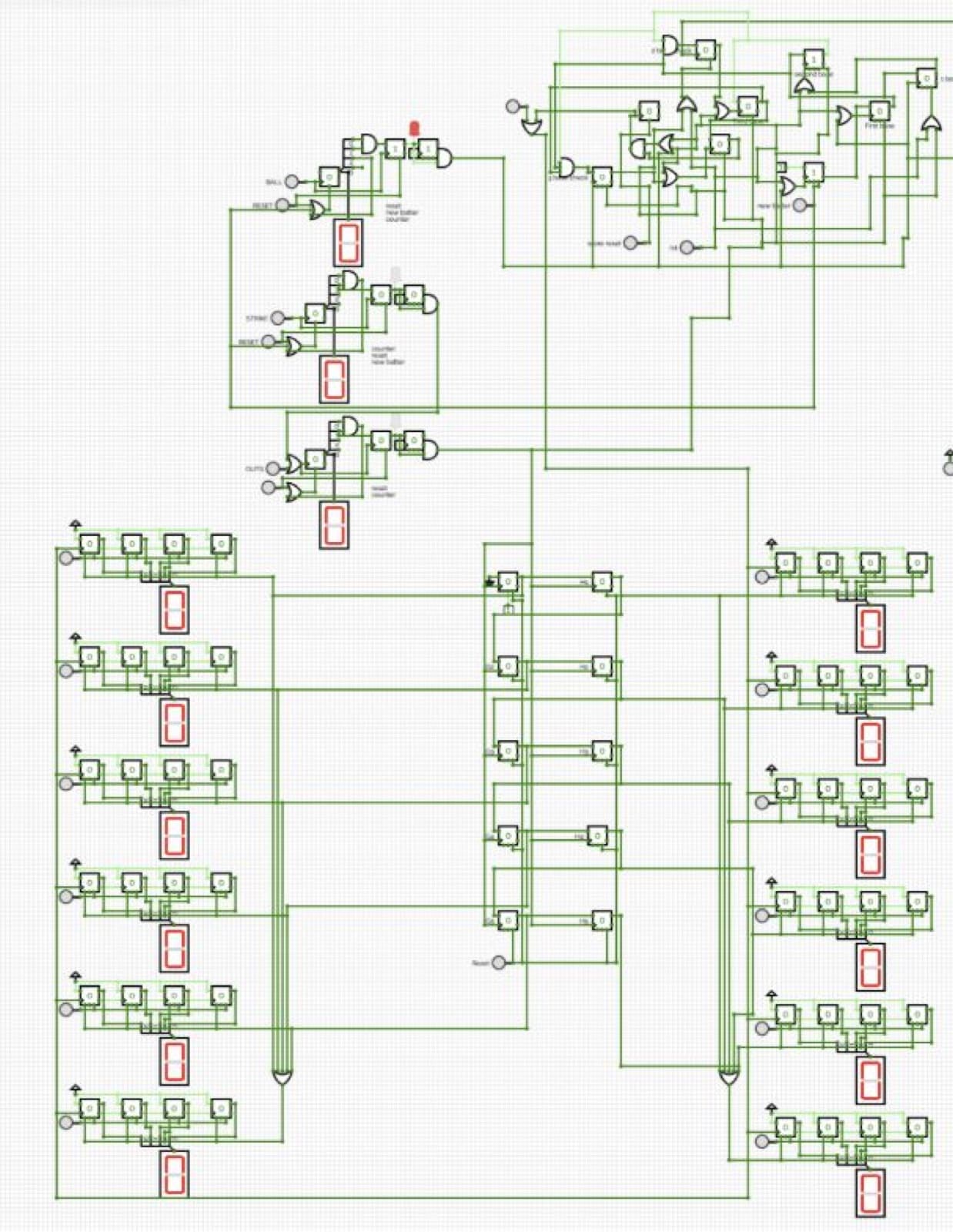
Built a ball / strike / out and runs scoreboard from T flip-flops and 7-segment displays, then simplified the first schematic into the final one.
debugging.
One press, many toggles: contact bounce.
Debugged multiple T toggles from a single button press (contact bounce) with a multimeter on the breadboard.