Columbia Space Initiative
Propulsion fluids on the rocketry team: a PID-driven ball valve that throttles liquid oxygen, and a subscale air rig that tests the electronic regulator under the same control software.
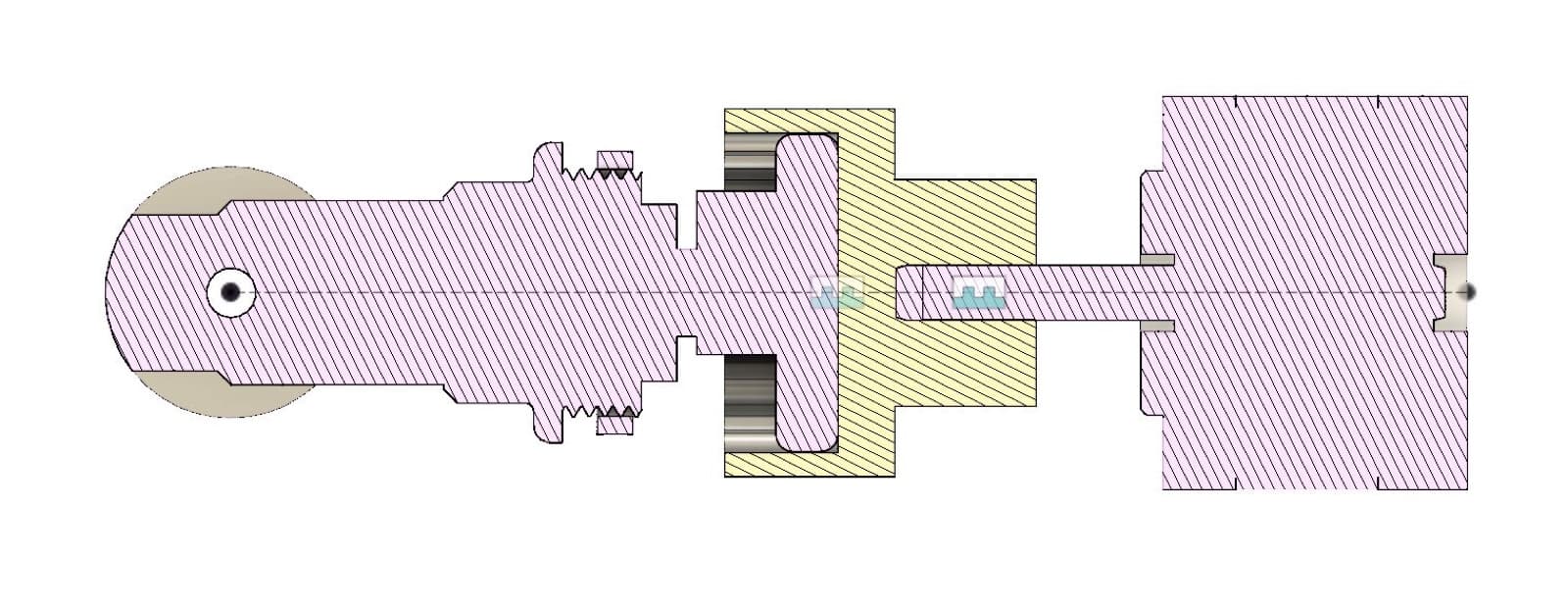
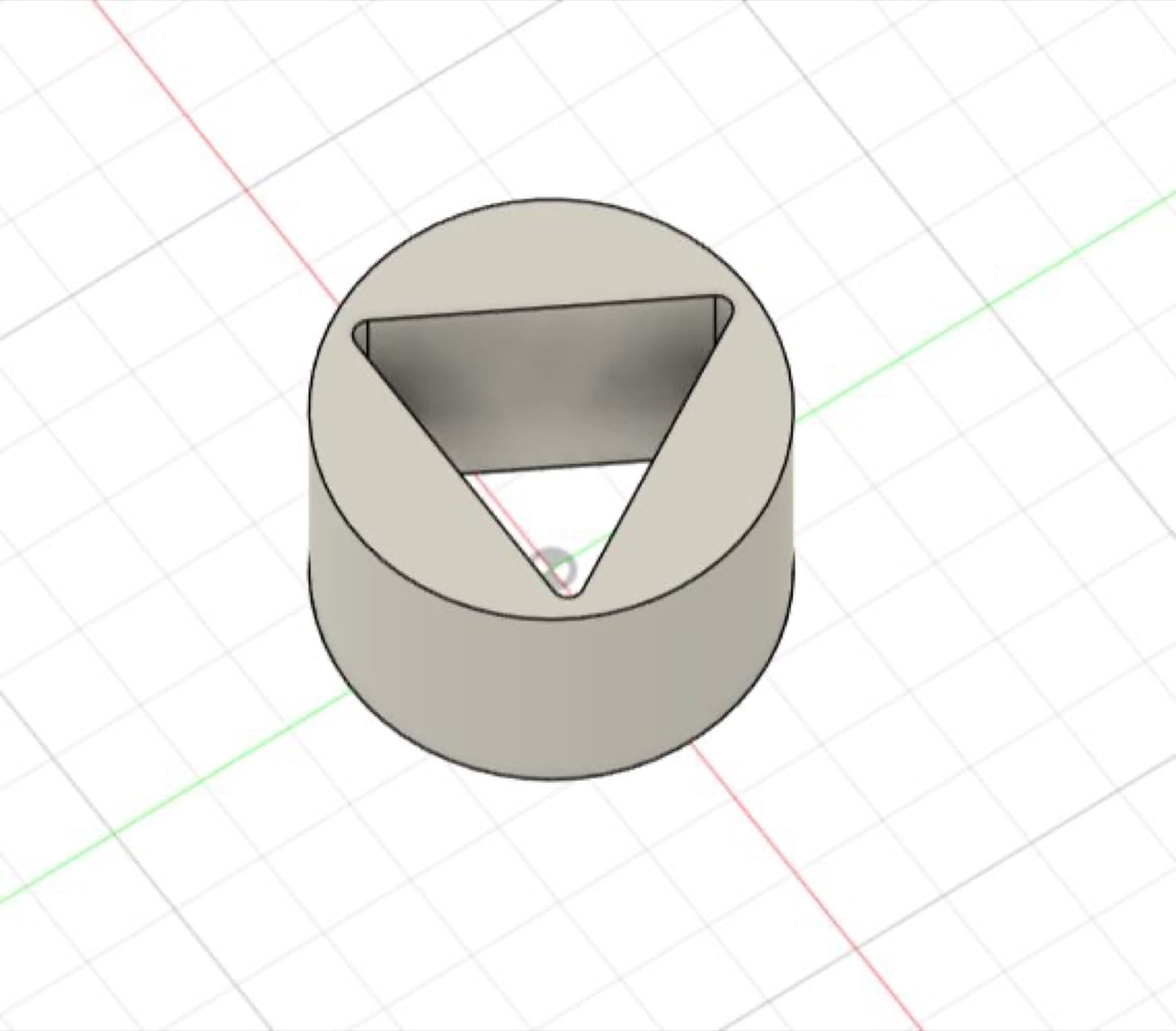
Jake's PID-driven ball valve for Columbia Space Initiative, cut open along the flow line. A brushless servo turns the ball through a splined coupler; an outer PID loop on tank pressure commands the ball angle and an inner loop drives the servo to it (the cascaded control he planned), holding the LOX tank at 450 psi against a 4.5 ksi supply.
Overview
I am on the propulsion fluids team of Columbia Space Initiative's rocketry project. Two pieces of that work are here.
First, a ball valve on a brushless motor that a PID loop can throttle, replacing the open-or-shut solenoid on the LOX line. Second, a subscale rig that runs the electronic regulator on air under the same control software, to measure how precisely it holds a setpoint before it ever touches propellant.
Tools
- Python
- PID
- BLDC
- CAD
- simulation
- pressure transducers
- 3D printing
- P&ID
- When
- Sep 2024 to now
- Where
- Columbia Space Initiative · Propulsion Fluids
- Role
- Propulsion Fluids Member
lox valve.
A ball valve on a brushless motor, steered by PID.
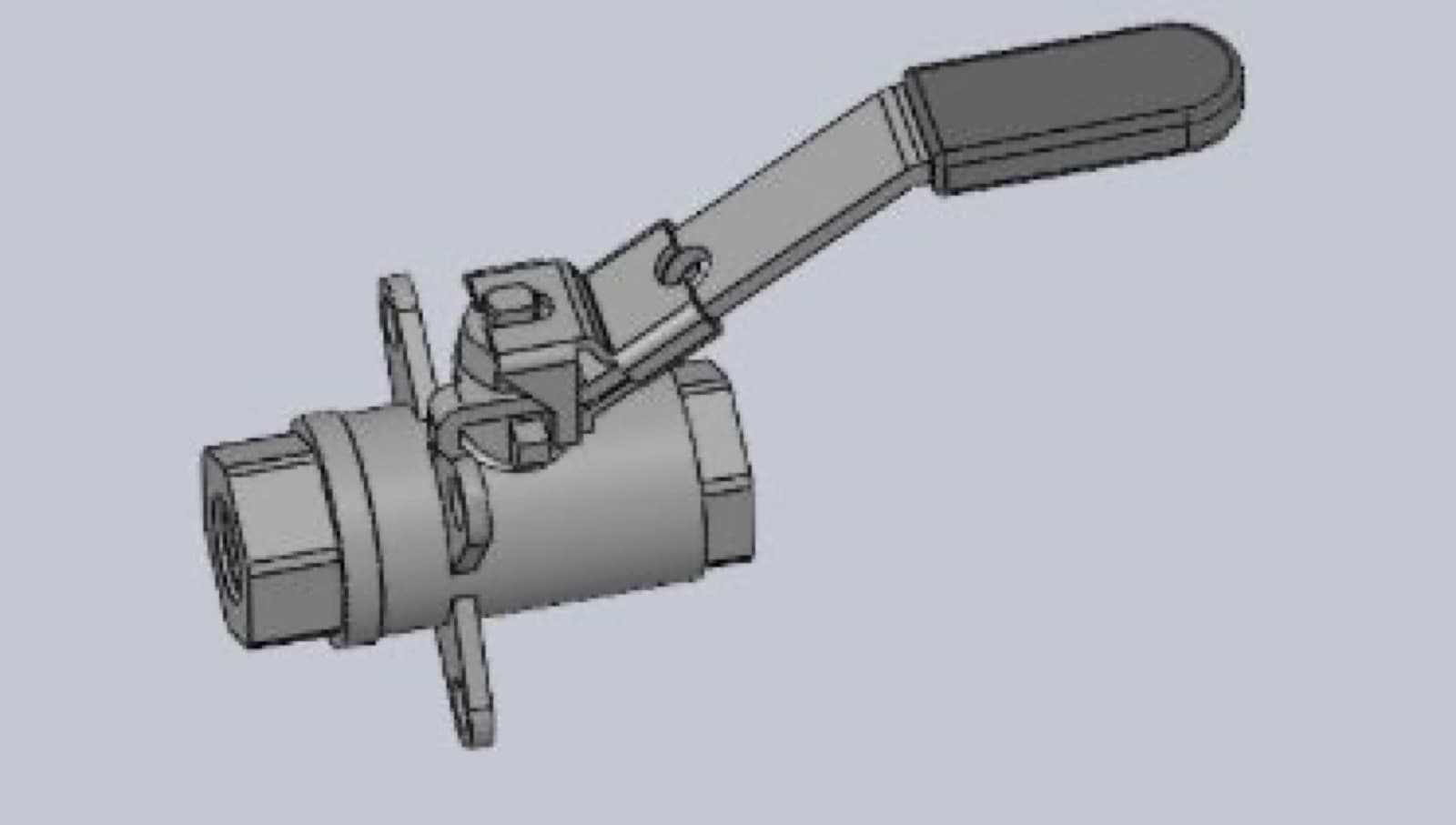
Finalized a PID operated ball valve, driven by a brushless motor, to control LOX flow in place of the solenoid valve.
Ran simulations to check the valve against 4.5 ksi upstream while maintaining the LOX tank's 450 psi internal pressure.
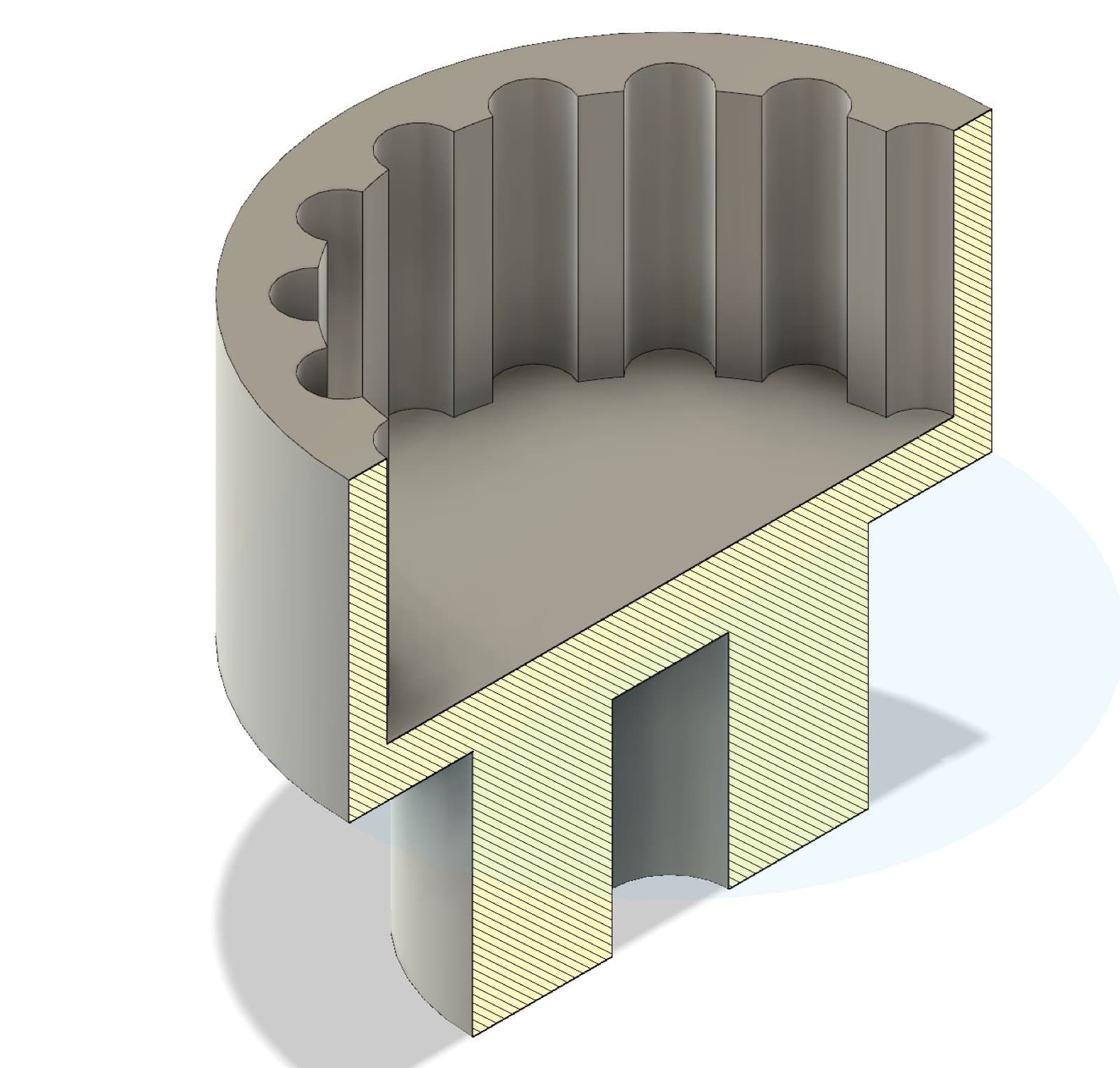
valve control.
Linear flow keeps one set of gains good across the whole stroke.
Modified the valve so flow is as linear as possible in angle, which keeps the PID's gains valid across the whole stroke.
Planned cascaded control: a secondary loop nested inside the primary PID.
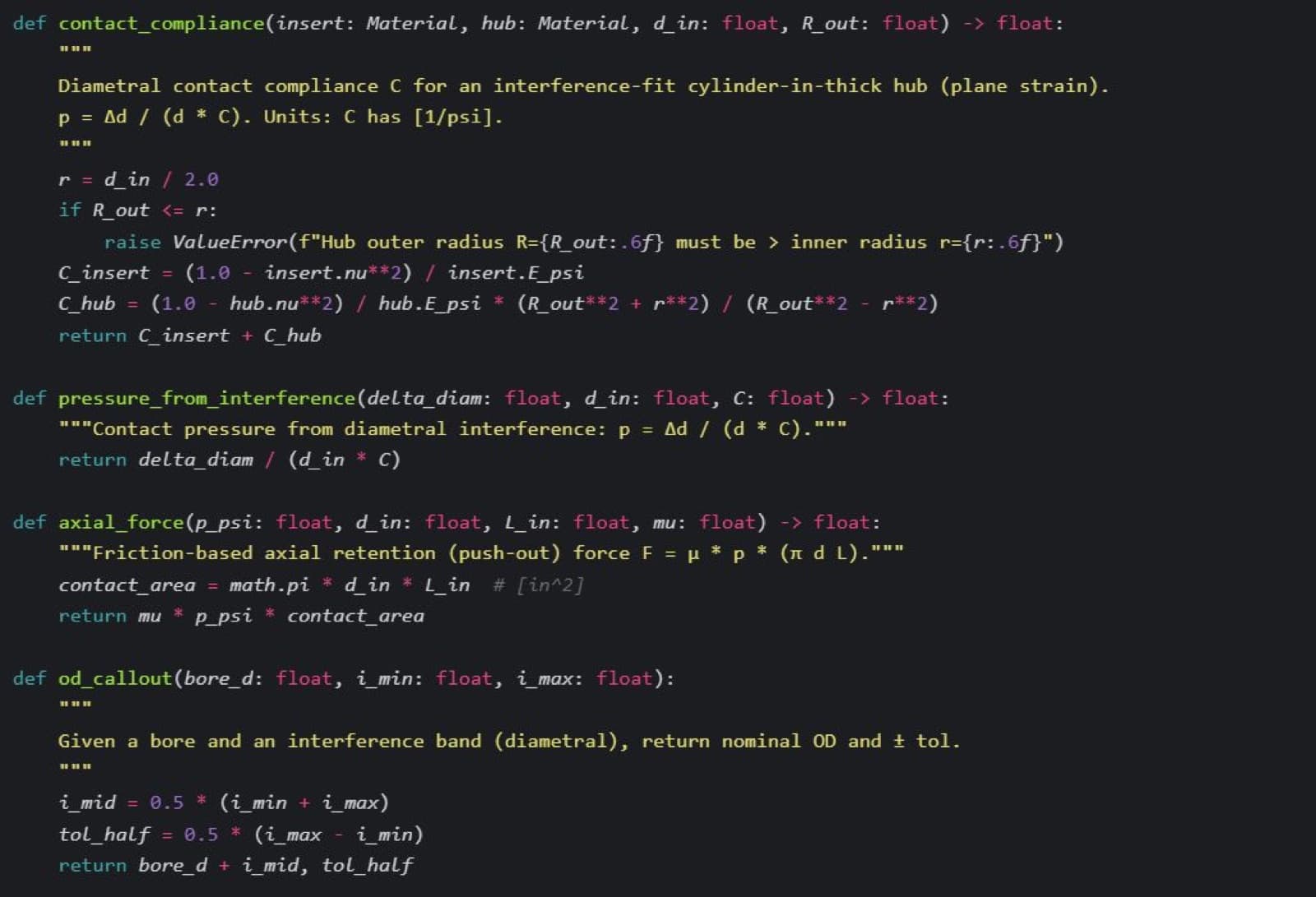
valve analysis.
The numbers behind the fit and the flow.
Wrote the Python analysis of LOX flow nonlinearities, turbulence and thermal contraction, including the interference-fit contact pressure for the insert.
e-reg rig.
Air first, propellant later.
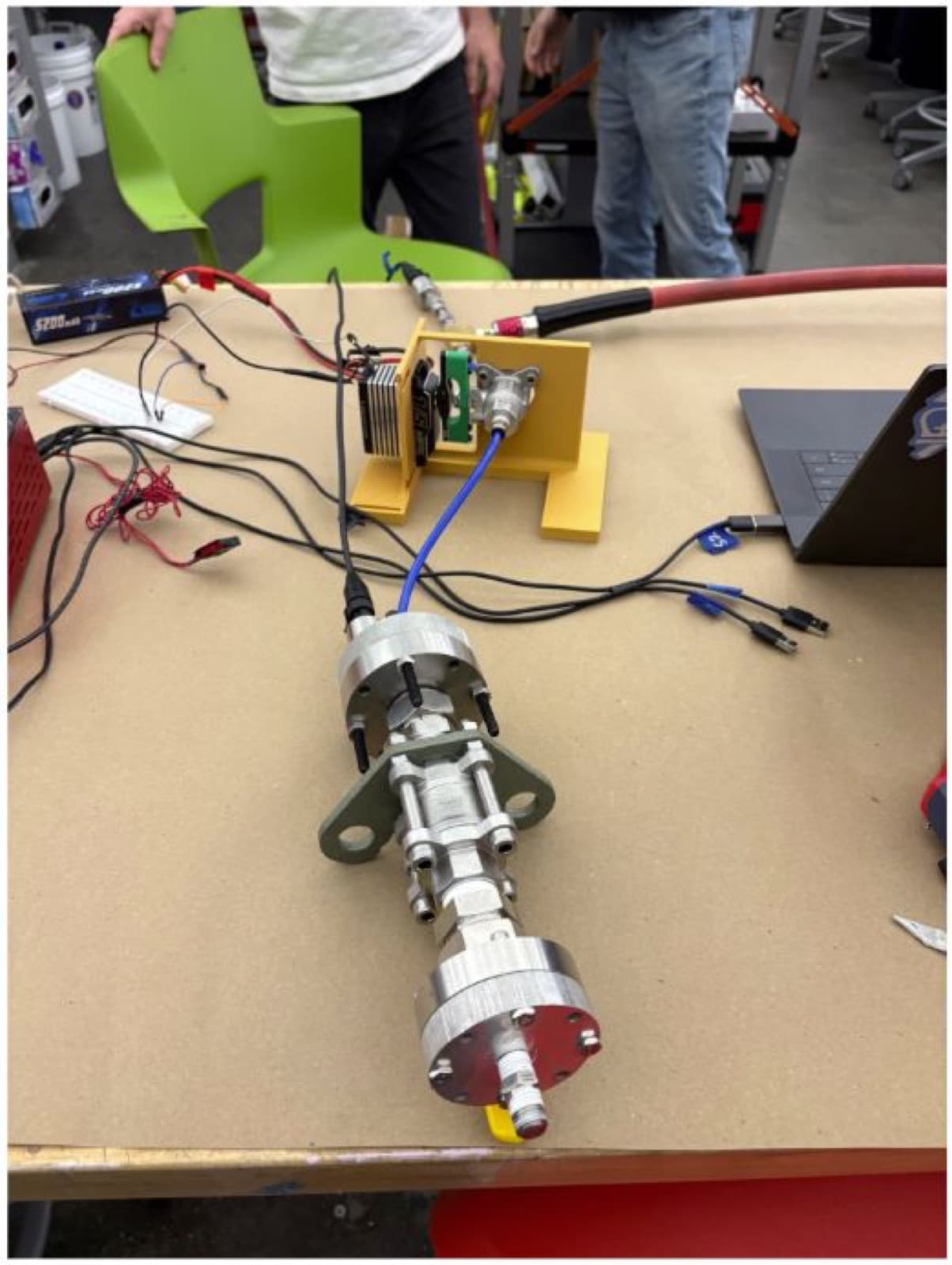
Built the rig from the P&ID: air compressor into a 6 gal tank (rated 200 psi), a pressure transducer, the E-reg, a second transducer, a downstream volume and an orifice at the end.
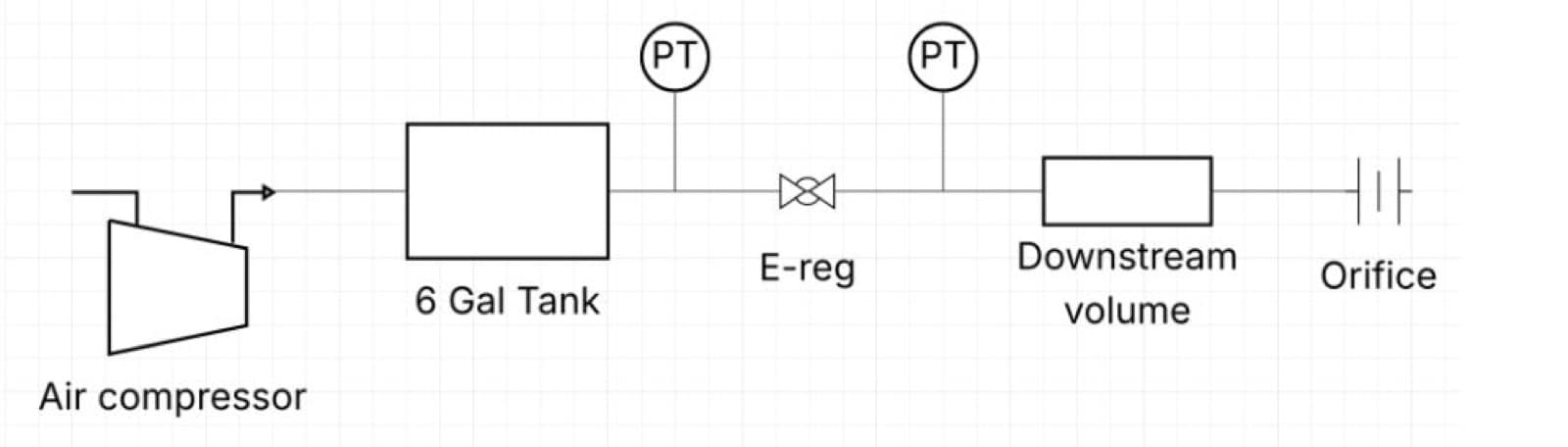
e-reg loop.
A constant leak makes the regulator earn its setpoint.
The orifice drains the downstream volume continuously, so the regulator has to keep working to hold its setpoint.
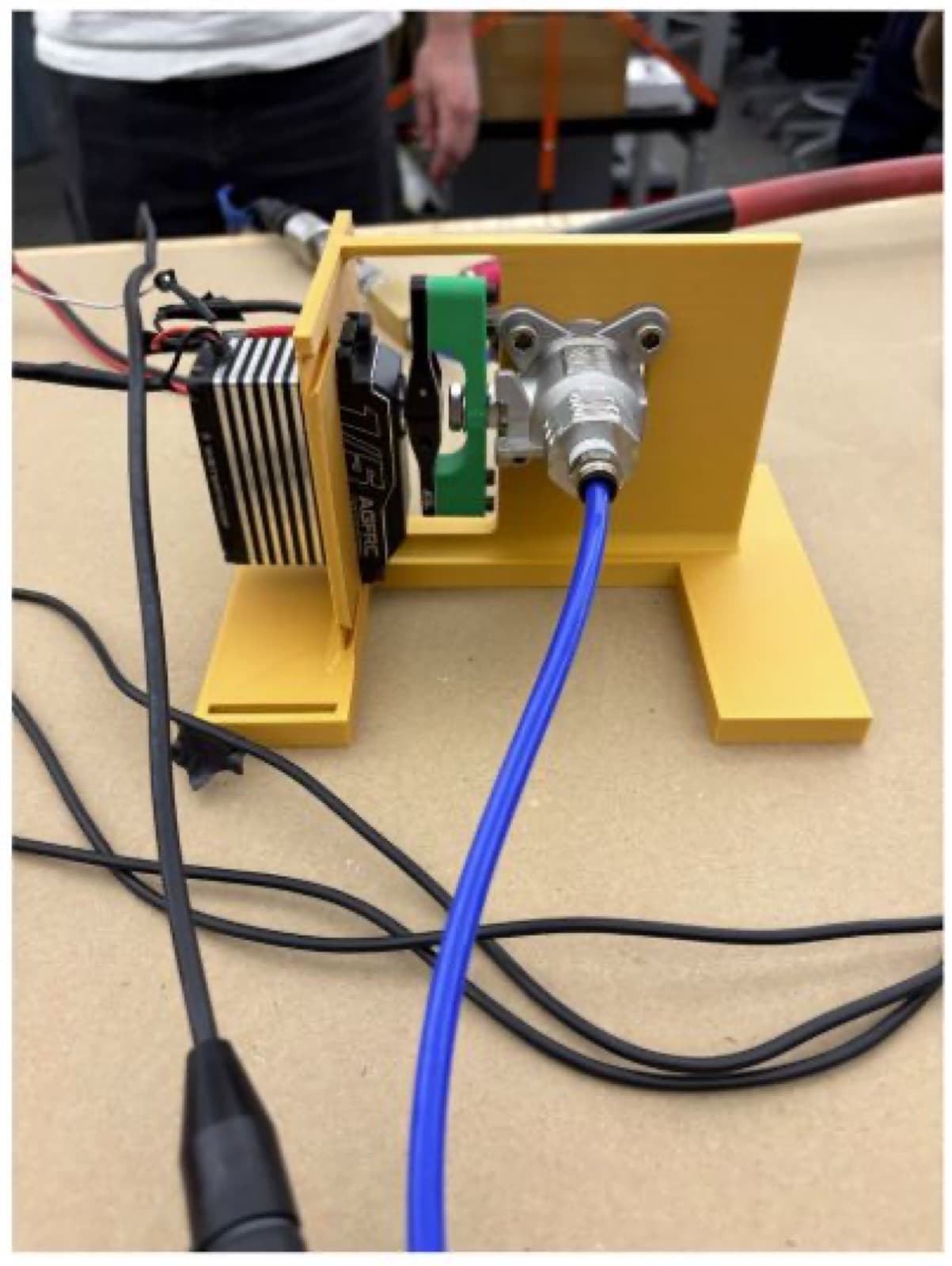
Mounted the actuator on a printed stand coupled to the valve, with the control software closing the loop on the downstream transducer.